
Transparency is becoming a competitive advantage
Environmental sustainability is no longer viewed solely as a corporate responsibility. Around the world, transparent environmental governance has become an essential component of economic resilience, investment readiness and long-term competitiveness.
Governments, financial institutions and international markets increasingly expect organisations to demonstrate measurable environmental performance through credible information rather than general commitments.
In this changing landscape, environmental data has become one of the most valuable strategic assets for sustainable development.

From reporting to informed decision-making
Environmental reporting has evolved significantly over the past decade.
Today, reliable information supports much more than regulatory compliance. It enables organisations to:
- monitor environmental performance;
- evaluate operational efficiency;
- improve resource management;
- strengthen accountability;
- support strategic planning.
Accurate environmental information also provides the evidence needed for sustainability reporting, ESG initiatives and continuous organisational improvement.
Transparency therefore becomes a practical management tool rather than simply a reporting requirement.
Data supporting sustainable finance
International experience increasingly demonstrates that high-quality environmental information strengthens confidence among investors, development partners and financial institutions.
Reliable environmental data contributes to:
- sustainability reporting;
- environmental risk assessment;
- responsible investment decisions;
- long-term stakeholder confidence.
Although reporting frameworks may differ across countries and industries, one common principle remains clear:
Better information leads to better decisions.
Vietnam’s evolving landscape
Vietnam is accelerating reforms in digital transformation, innovation and sustainable development.
As environmental governance becomes more integrated, environmental information will play an increasingly important role in supporting public administration, business operations and collaborative environmental initiatives.
The gradual adoption of ESG principles, circular economy policies and digital governance creates favourable conditions for strengthening environmental data systems across multiple sectors.
GREEN’s perspective
GREEN believes that trusted environmental information forms the foundation of effective environmental governance.
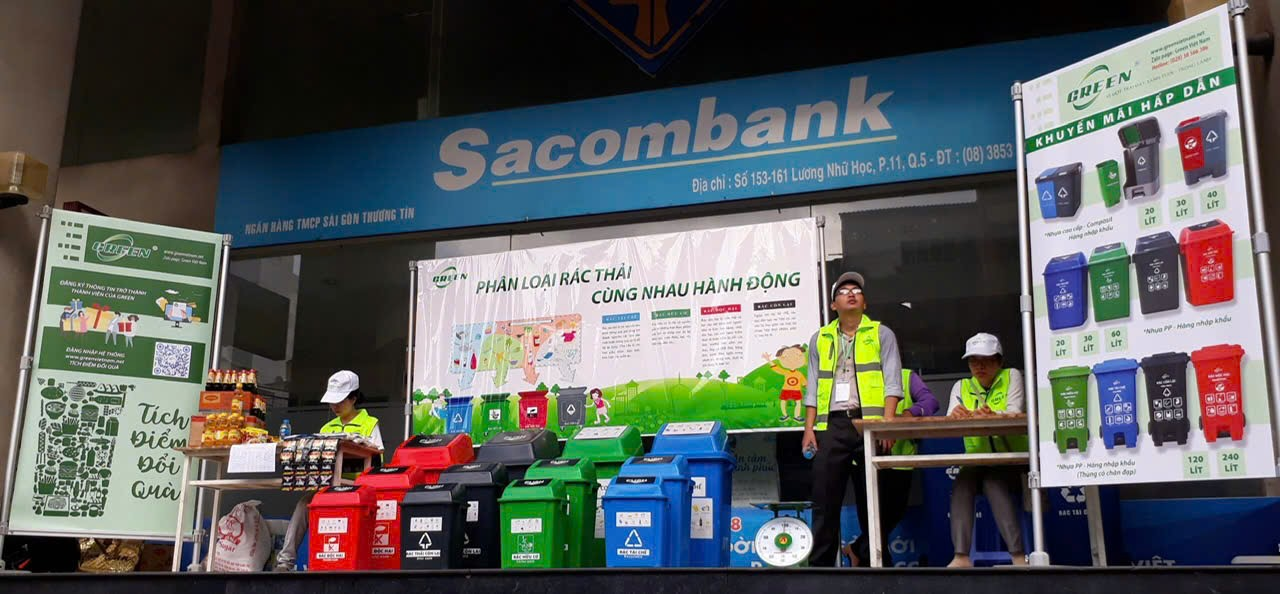
Years of practical engagement have shown that environmental activities generate valuable operational information. When appropriately organised and connected, these data can support planning, coordination, evaluation and continuous improvement.
This perspective has guided the ongoing development of GEOS (GREEN Enterprise Operating System) as a data-driven environmental governance framework designed to facilitate information integration and evidence-based environmental management.
Rather than focusing solely on technology, GREEN emphasises the importance of governance, collaboration and reliable information as the basis for sustainable environmental solutions.
Looking ahead
Environmental transparency is expected to become increasingly important as countries pursue sustainable development and digital transformation.
Building trusted environmental information systems requires collaboration among governments, businesses, academic institutions and communities.
GREEN remains committed to contributing to this long-term journey through research, practical implementation and continuous innovation, supporting environmental governance that is transparent, adaptive and sustainable.